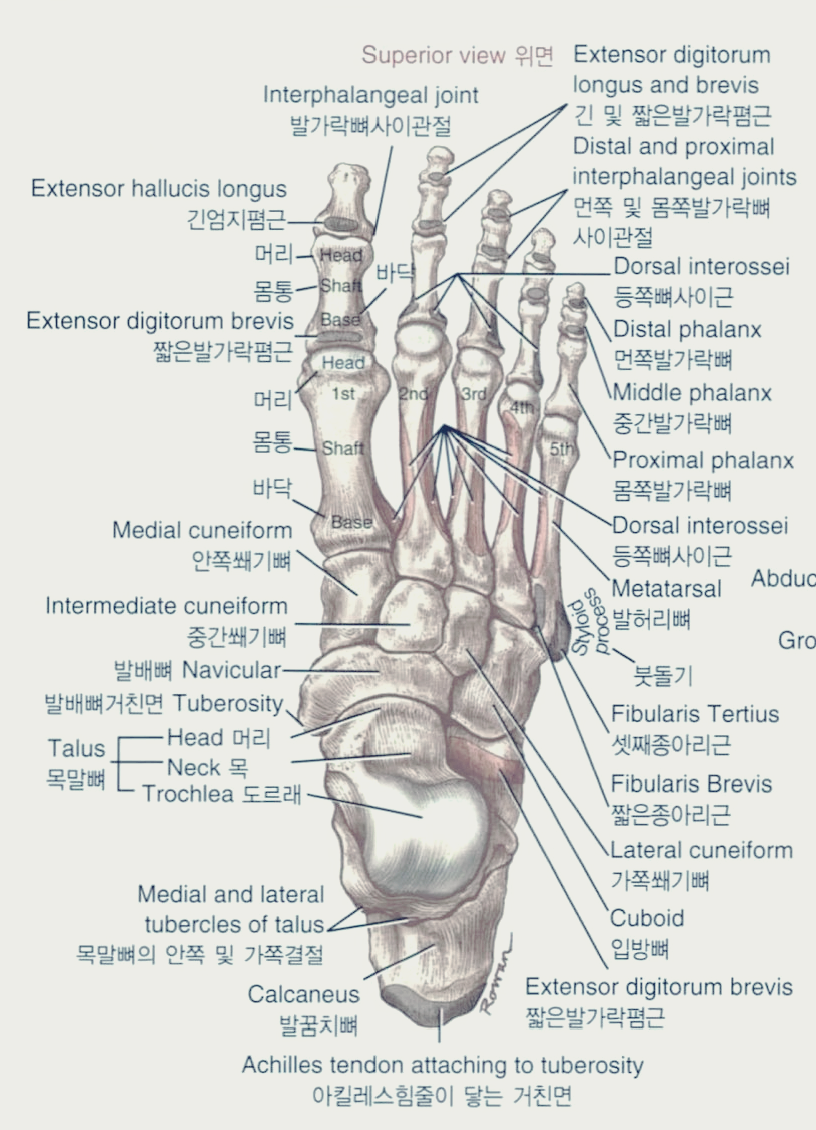
Talus
The talus is the topmost bone in the foot and is a key component of the foot. The dorsal or trochlear surface of the talus is convex in an anterior-posterior direction and slightly concave in a medial-lateral direction, forming a dome-shaped structure.
This pulley surface and its neighbouring surfaces are completely covered with smooth cartilage tissue, providing a smooth articular surface that allows the hock calf joint to move smoothly. The characteristically protruding head of the hock bone extends anteriorly and slightly medially towards the navicular bone.
In adults, the long axis of the neck causes the head of the nuchal bone to be positioned approximately 30 degrees medial to the sagittal plane. In contrast, in children, the head of the nuchal bone is pointed inwards at a greater angle, around 40-50 degrees, which naturally leads to an inversion of the feet.
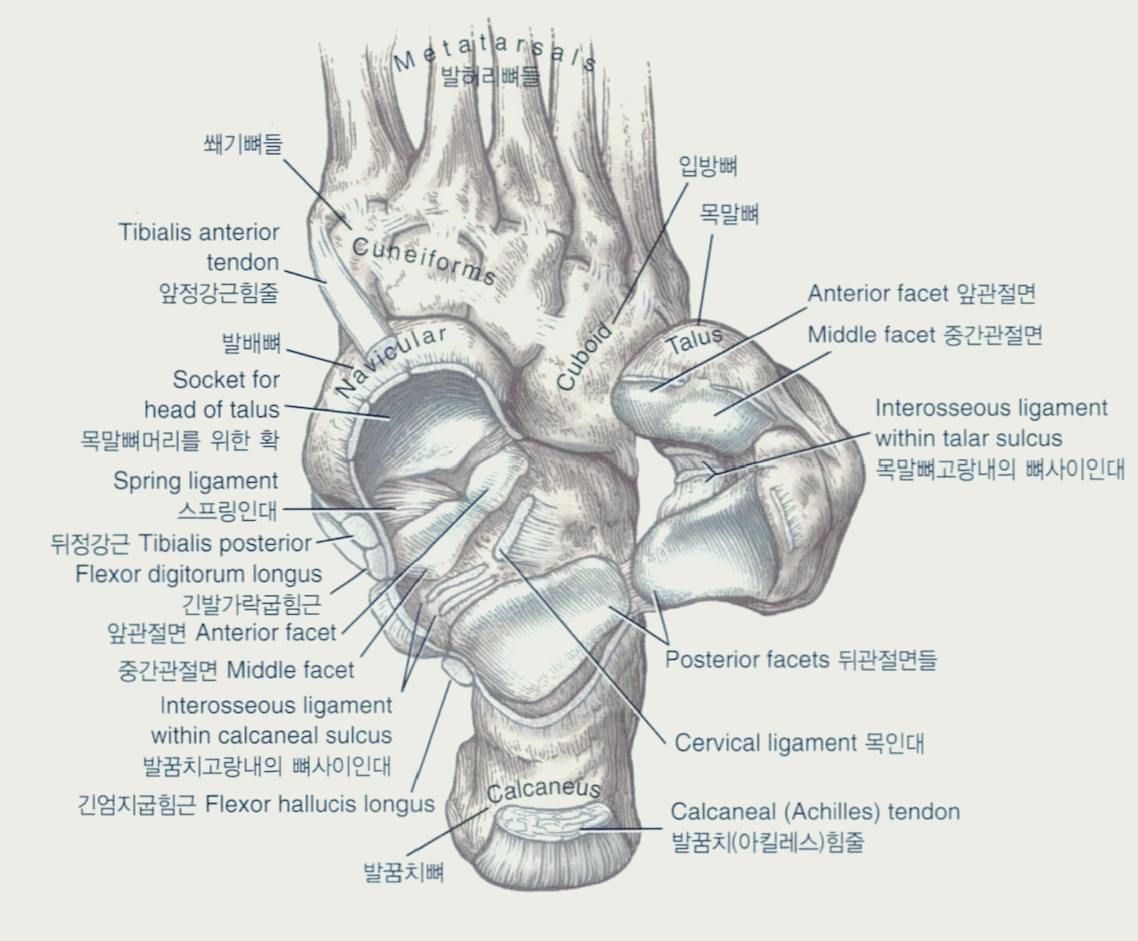
The three distinctive articular surfaces on the bottom (underside) of the hock bone, the anterior and middle facets, are gently curved and, in most cases, naturally articulate with each other. These articular facets are completely covered by articular cartilage, which also continuously covers part of the head of the hock bone immediately adjacent to them.
The posterior facet, which is concave and egg-shaped, has the largest area of the three articular facets. Functionally, these three articular facets articulate with three corresponding articular facets on the dorsal (upper) surface of the heel bone, forming an important structure called the subtalar joint. The talar sulcus is a deep groove that runs obliquely between the anterior-medial and posterior articular surfaces.
The lateral and medial tubercles project from the posterior-medial aspect of the talar sulcus, and the deep groove between these two tubercles acts as a natural pulley to allow the tendons of the flexor digitorum longus to glide smoothly.
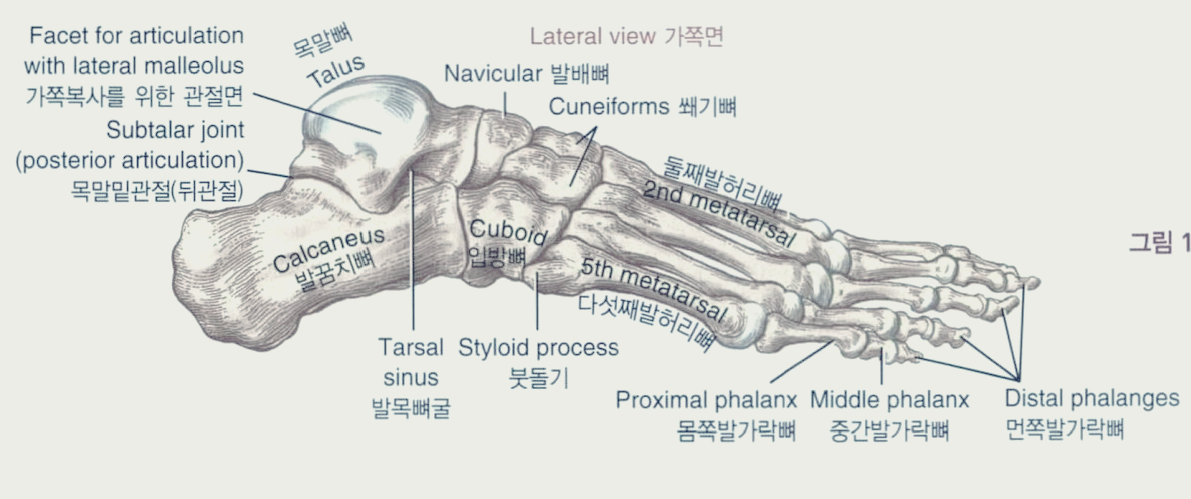
Calcaneus
The heel bone (calcaneus), the largest of the ankle bones, is structured to effectively absorb and disperse the impact of the heel striking the ground during walking. The calcaneal tuberosity, a large, rough surface at the posterior end of the heel bone, is where the Achilles tendon, the most powerful tendon in the lower limb, attaches securely.
On the plantar aspect of the rough side of the heel bone are the lateral and medial processes, which are the origins of many of the intrinsic muscles of the foot and the attachment points for the deep plantar fascia, an important support structure of the foot.
The heel bone forms a complex articulation with several ankle bones in the anterior and dorsal planes. The anterior surface of the heel bone, which is relatively small and gently curved, articulates with the cuboid bone to form the calcaneocuboid joint, which plays an important role in the foot's mobility.
On the dorsal surface, which occupies a larger area, there are three characteristic articular facets that interlock with the articular facets in the hock bone. The anterior and middle facets are relatively small and almost flat, which allows for stable articular contact. The posterior facet is the largest and most convex of the three articular facets and is designed to fit perfectly with the concave shape of the posterior facet in the hock bone.
Between the posterior and middle facets is a deep, wide, diagonal furrow called the calcaneal sulcus. Within this furrow are strategically placed attachments for several powerful ligaments that are responsible for the stability of the hock joint. Due to the structural characteristics of the navicular joint, the heel furrow and the navicular furrow meet to form a unique tunnel-like cavity within the navicular joint called the sinus tarsi.
The sustentaculum talus is a horizontal shelf-like structure that projects inwards from the dorsal surface of the heel bone, extending inwards as if it were an open arm. This specialised structure, the sustentaculum talus, is strategically positioned just below the mid-articular surface of the talus to provide effective support to this articular surface, hence the name sustentaculum talus (which means ‘support for the talus’ in Latin).