Lateral Collateral Ligament of the Ankle
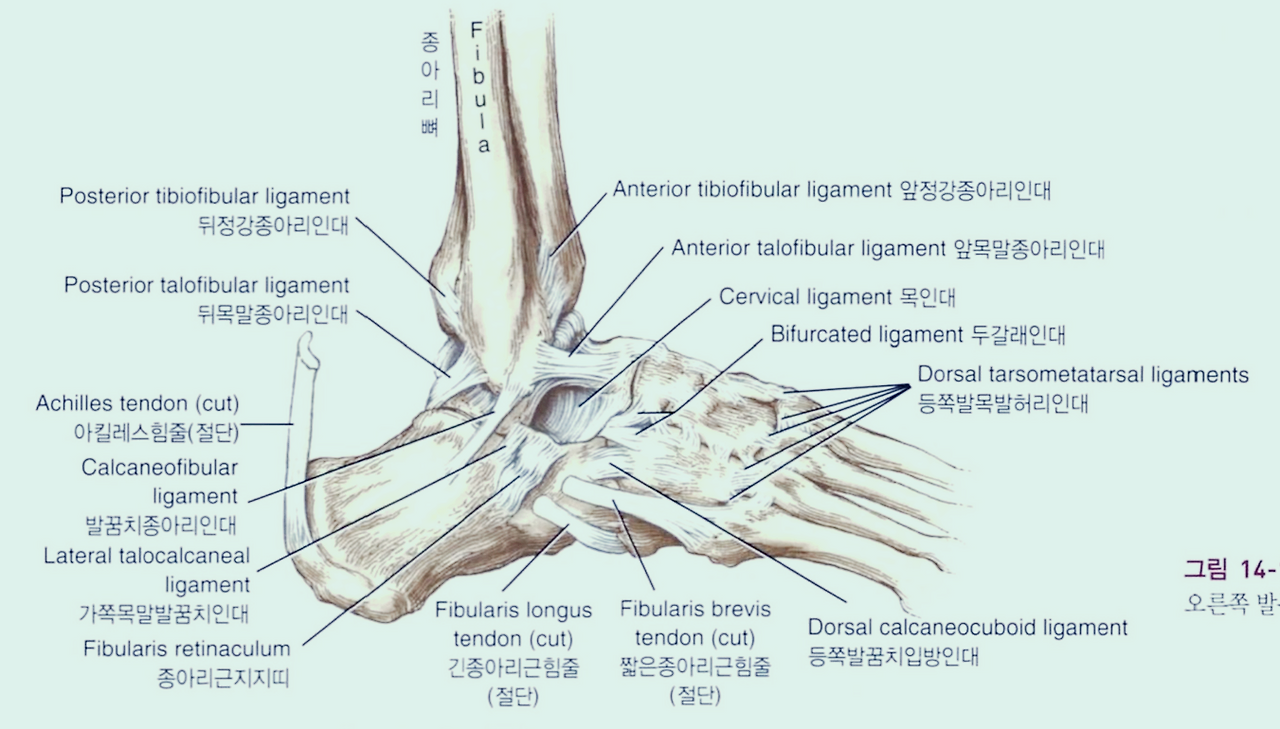
The lateral collateral ligament (LCL), which provides lateral structural support to the ankle, consists of three primary components: the anterior talofibular ligament (ATFL), the posterior talofibular ligament (PTFL), and the calcaneofibular ligament (CFL).
Anatomically, due to the structural characteristic of the mortise where the medial surface is not entirely enclosed by the medial malleolus, most ankle sprains are associated with excessive inversion movements, leading inevitably to damage to the lateral ligamentous structures.
Anatomically, due to the structural characteristic of the mortise where the medial surface is not entirely enclosed by the medial malleolus, most ankle sprains are associated with excessive inversion movements, leading inevitably to damage to the lateral ligamentous structures.
Anterior Talofibular Ligament (ATFL)
The anterior talofibular ligament (ATFL) originates from the anterior aspect of the lateral malleolus and runs anteromedially to attach to the neck of the talus. Among the lateral ligament complex, this ligament is the most commonly injured, primarily due to sudden inversion or adduction movements in the horizontal plane.
Injuries often occur during landing from a jump, particularly when stepping on uneven ground or another person’s foot.
Injuries often occur during landing from a jump, particularly when stepping on uneven ground or another person’s foot.
Calcaneofibular Ligament (CFL)
The calcaneofibular ligament (CFL) originates from the apex of the lateral malleolus and courses posteroinferiorly to attach to the lateral surface of the calcaneus. This ligament spans both the talocrural joint and the subtalar joint, providing resistance against inversion stress.
The CFL and ATFL function as a pair, restricting inversion throughout the range of dorsiflexion and plantarflexion of the foot. Clinically, approximately two-thirds of all lateral ligament injuries involve a combined injury to these two ligaments.
The CFL and ATFL function as a pair, restricting inversion throughout the range of dorsiflexion and plantarflexion of the foot. Clinically, approximately two-thirds of all lateral ligament injuries involve a combined injury to these two ligaments.
Posterior Talofibular Ligament (PTFL)
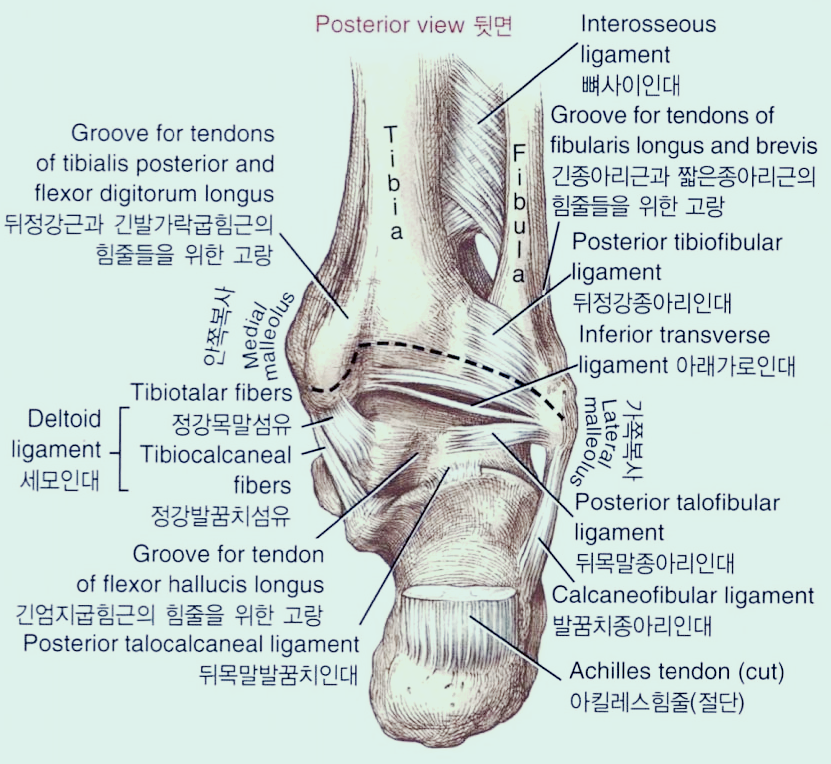
The posterior talofibular ligament (PTFL) is a critical structure responsible for posterolateral stability of the ankle. It originates from the posterior-internal surface of the lateral malleolus and attaches to the lateral tubercle of the talus.
The fibers of the PTFL traverse horizontally across the posterior aspect of the talocrural joint, running from anterolateral to posteromedial. This unique orientation is a key factor in the functional characteristics of the ligament. The primary role of the PTFL is to provide multidirectional stability to the talus within the mortise, particularly limiting excessive abduction and posterior translation of the talus when the ankle is in full dorsiflexion.
The fibers of the PTFL traverse horizontally across the posterior aspect of the talocrural joint, running from anterolateral to posteromedial. This unique orientation is a key factor in the functional characteristics of the ligament. The primary role of the PTFL is to provide multidirectional stability to the talus within the mortise, particularly limiting excessive abduction and posterior translation of the talus when the ankle is in full dorsiflexion.
Inferior Transverse Ligament (ITL)
The inferior transverse ligament (ITL) is a structurally small but biomechanically significant thick fibrous band, functioning as a distal extension of the PTFL. Anatomically, its fibers are arranged meticulously and continue medially toward the posterior aspect of the medial malleolus, forming a crucial component of the posterior wall that enhances the posterior stability of the talocrural joint.
Functional Summary of the Ligaments
The medial and lateral collateral ligaments of the ankle, by virtue of their anatomical positions and orientations, constitute a comprehensive stabilization system that effectively limits excessive eversion and inversion in all associated joints. Many of these ligaments are arranged at various angles running anteroposteriorly, a characteristic that plays a vital role in controlling the anteroposterior translational movements of the talus within the mortise.
From the perspective of joint kinematics, the talus demonstrates anterior translation during plantarflexion and posterior translation during dorsiflexion. These complex movement patterns result in maximal elongation of certain collateral ligaments at the end range of dorsiflexion or plantarflexion, ensuring joint stability.
Notably, many major ligaments traversing the talocrural joint also cross other joints in the foot, such as the subtalar joint and the talonavicular joint. This multi-joint bridging characteristic underscores their essential role in maintaining the overall structural integrity and stability of the entire ankle complex.
From the perspective of joint kinematics, the talus demonstrates anterior translation during plantarflexion and posterior translation during dorsiflexion. These complex movement patterns result in maximal elongation of certain collateral ligaments at the end range of dorsiflexion or plantarflexion, ensuring joint stability.
Notably, many major ligaments traversing the talocrural joint also cross other joints in the foot, such as the subtalar joint and the talonavicular joint. This multi-joint bridging characteristic underscores their essential role in maintaining the overall structural integrity and stability of the entire ankle complex.